In the fiberglass industry, compounds are widely used for filling edges and cavities, repairing defects, finishing surfaces, and bonding inserts and semi-finished components—ensuring high performance across various applications.
The key distinguishing factor is the compound’s function: some are designed to join and reinforce, while others are meant to correct and finish. Understanding the differences is essential to choosing the most suitable solution for your project.
From a performance standpoint, these products stand out for:
Bonding paste is used across multiple sectors:
Thanks to their fast curing and vertical stability, they can be applied in one or more passes without compromising the final result. Their excellent adhesion and easy sandability make them particularly suitable for aesthetic finishing stages.
The range of filling compounds includes versions tailored to different application needs:
Choosing the right filling compound simplifies repair operations and ensures uniform, stable surfaces ready for subsequent processing stages.
This classification makes it easy to quickly select the most suitable product, combining structural strength and aesthetic finishing requirements according to the specific project.
Contact us for dedicated technical consultancy.
The key distinguishing factor is the compound’s function: some are designed to join and reinforce, while others are meant to correct and finish. Understanding the differences is essential to choosing the most suitable solution for your project.
Bonding Paste: Adhesion and Structural Strength
Bonding paste is an essential technical solution during the assembly of fiberglass components, expanded materials, or wood—especially when a reliable and long-lasting structural bond is required.From a performance standpoint, these products stand out for:
- High adhesion on different substrates
- Excellent mechanical strength, including fiber-reinforced versions
- Thixotropic formulations that prevent sagging and improve application control
- Adjustable setting times to optimize assembly processes
Bonding paste is used across multiple sectors:
- Marine and boating: structural assembly of hulls and components exposed to saltwater and UV rays
- Pools and sanitary ware: reliable, long-lasting bonding on fiberglass products
- Construction and architecture: integration of structural elements and technical components, including vertical or complex surfaces
- Furniture and design: precise bonding of different materials, ensuring structural strength and greater design freedom
Filling Compounds: Filling and Finishing
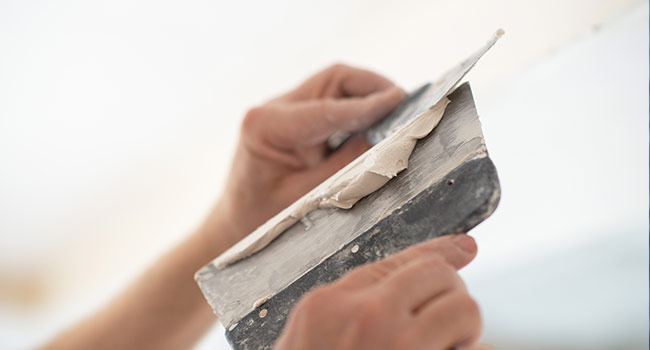
Filling compounds are specifically developed for repair and finishing operations. They are designed to correct surface imperfections such as cracks, holes, channels, voids, and molding defects.Thanks to their fast curing and vertical stability, they can be applied in one or more passes without compromising the final result. Their excellent adhesion and easy sandability make them particularly suitable for aesthetic finishing stages.
The range of filling compounds includes versions tailored to different application needs:
- Corner radiusing, with formulations designed to prevent bubbles or voids even in hard-to-treat areas
- Direct gelcoat contact, using isophthalic, iso-NPG, or vinylester resins to ensure high compatibility and long-term durability
- Surface fairing, ideal for finishing and preparation stages, featuring fast drying, easy sanding, and excellent adhesion to subsequent fillers
Choosing the right filling compound simplifies repair operations and ensures uniform, stable surfaces ready for subsequent processing stages.
Differences Between Bonding Paste and Filling Compounds
To better understand the differences, we can compare bonding paste and filling compounds according to key criteria:- Fiber content: Bonding paste contains fiber and becomes a structural part of the assembly, whereas filling compounds do not contain fiber, as they are intended only for filling and finishing.
- Function: Bonding paste is used to join components and withstand stress, while filling compounds correct surface defects and smooth surfaces.
- Application sectors: Both types are used in marine, automotive, and industrial sectors, but with different objectives—bonding paste ensures strength and adhesion; filling compounds enhance aesthetics and eliminate imperfections.
- Main advantages: Bonding paste offers high adhesion and chemical and mechanical resistance; filling compounds stand out for their light weight, low shrinkage, and excellent sandability.
Poly3 Compounds Range: Solutions for Every Need
The Poly3 range includes compounds developed to meet the needs of various industries. The products are divided into four main categories:- Special compounds: Deliver superior performance in terms of adhesion, mechanical strength, thermal stability, water resistance, and chemical resistance. Ideal for structural applications requiring maximum reliability.
- Bonder: Special bonding paste for gluing expanded cores such as PVC, PET, SAN, or PU sheets and shapes, used in the production of fiberglass sandwich structures. Their light weight and strength make them ideal for components that must maintain integrity and dimensional accuracy.
- Filling compounds: Designed to fill cracks, holes, channels, voids, and minor surface defects. Their semi-rigid consistency allows easy application and fine sanding, ideal for precise finishing.
- Bonding paste: Developed to join fiberglass components, semi-finished expanded materials, or wood during assembly operations. By ensuring high adhesion and strength, they provide structural solidity and long-term durability.
This classification makes it easy to quickly select the most suitable product, combining structural strength and aesthetic finishing requirements according to the specific project.
Contact us for dedicated technical consultancy.